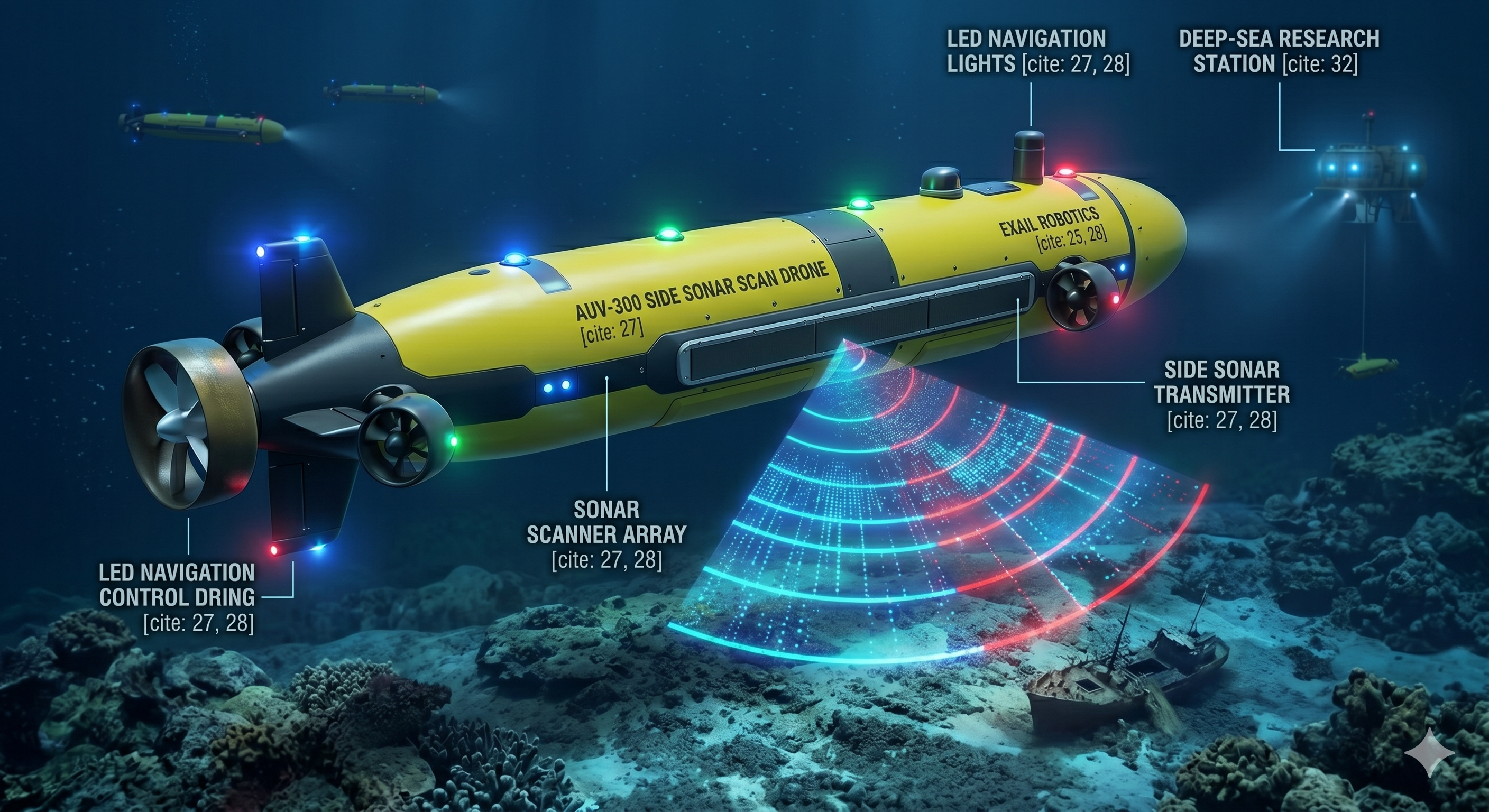
From February through May, I had the incredible opportunity to complete my internship at Exail Robotics Belgium, an experience that became one of the most transformative chapters of my academic and professional journey. During these months, I was immersed in the challenging and fascinating world of object detection and object recognition pipelines - an area that was entirely new to me when I first began.
Starting this internship, I quickly realized that I was stepping into a field that demanded not only technical skill but also persistence, curiosity, and adaptability. Object detection and recognition are not simply about making machines "see"; they involve teaching systems to interpret, classify, and understand complex visual environments with precision and reliability. At first, this seemed overwhelming. Coming from a background where this specific domain had remained largely unexplored, I was faced with a steep learning curve. However, what initially felt unfamiliar soon became an exciting challenge.
Research first
My journey began with deep research. I spent countless hours diving into academic papers, studying cutting-edge methodologies, and exploring the theoretical foundations behind modern computer vision systems. Reading through these papers was not always easy - many introduced highly technical concepts, advanced neural architectures, and sophisticated training methodologies that required patience to fully understand. Yet, this process became one of the most rewarding aspects of the internship. Each paper represented a new piece of the puzzle, gradually helping me build a broader understanding of how object detection and recognition systems are designed, optimized, and deployed.
From theory to practice
But understanding theory was only the beginning. The real challenge came when it was time to dissect these ideas and translate them into practical, real-world solutions. This was where true learning happened. Moving from theory to implementation required us to question assumptions, troubleshoot failures, and constantly adapt our approach. We encountered numerous obstacles along the way - data limitations, model performance issues, optimization bottlenecks, and the inevitable trial-and-error that accompanies innovation. There were moments when progress felt slow, when solutions seemed just out of reach, and when the complexity of the work tested our resilience.
Despite these challenges, the experience was profoundly collaborative and educational. Through persistence, experimentation, and teamwork, we gradually overcame each hurdle. Every failed test became a lesson. Every refinement brought us one step closer to our goals. Over time, what once seemed daunting evolved into a robust understanding of the entire pipeline - from data preprocessing and model selection to fine-tuning and deployment considerations.
What we achieved
By the end of the internship, we had successfully developed robust object detection and object recognition pipelines capable of addressing real-world problems. This achievement was particularly meaningful because it was not just about creating functional systems; it was about proving to ourselves that we could enter an unfamiliar domain, confront its challenges head-on, and produce impactful results. Seeing our hard work materialize into reliable solutions was deeply fulfilling.
Final presentation
One of the proudest moments of this journey was our final presentation. After months of research, experimentation, setbacks, and breakthroughs, we had the privilege of presenting our work to our mentor and the entire team. This presentation was more than a summary of our technical accomplishments - it was a reflection of our growth, perseverance, and dedication. Sharing our process, the challenges we faced, and the solutions we built was immensely rewarding. It was an opportunity to showcase not only the final product but also the depth of effort and learning that had gone into every stage of development.
Looking back
Looking back, my internship at Exail Robotics Belgium was far more than a professional experience; it was a period of personal and intellectual growth. It taught me how to approach unfamiliar challenges with confidence, how to bridge the gap between academic theory and practical application, and how perseverance can transform uncertainty into achievement. From February to May, I did not simply work on object detection and recognition - I evolved as a problem solver, researcher, and engineer.
This journey was incredible, and it has left a lasting impact on me. It strengthened my passion for innovation, expanded my technical horizons, and showed me the power of stepping beyond my comfort zone. Most importantly, it proved that even in a field you have never explored before, determination, continuous learning, and teamwork can lead to remarkable outcomes.