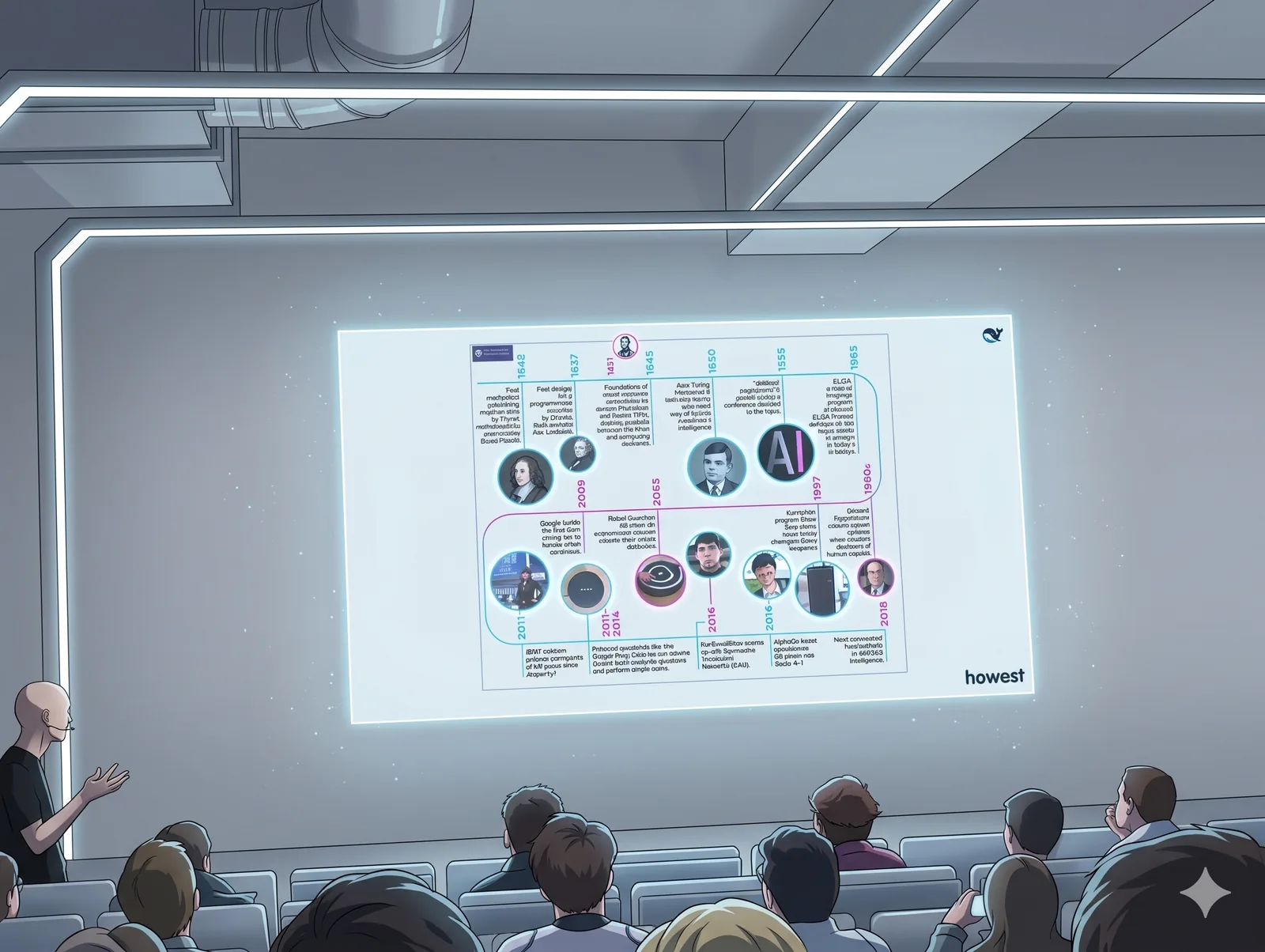
Today I attended a tech meetup on DeepSeek and the rapid rise of China's AI ecosystem. The session was a useful look at how the AI landscape has been shifting in ways that don't always make Western headlines, and how the conversation about who's building cutting-edge AI is broader than the usual short list of well-known labs.
What stood out
What stood out most was how a small, highly focused team managed to challenge major players like OpenAI not with massive compute budgets, but with smarter optimization, efficient architectures, and strategic engineering choices. The story isn't about brute force — it's about discipline. When the budget for compute is constrained, those constraints push you to make better choices everywhere else: in your training pipeline, in your data curation, in your evaluation loop, and in the architectural decisions that determine how much you can extract from each GPU-hour.
Treating efficiency as a first-class concern from the start — rather than something to optimise after the fact — shapes everything around it. It also tends to produce systems that are more deployable in the real world, because they were built to run on what you actually have, not on what you wish you had.
Why it matters more broadly
It's a powerful reminder that innovation isn't always driven by who has the most GPUs, but by who uses their resources the smartest. The implications go beyond DeepSeek itself. For anyone working in AI without hyperscaler-level infrastructure — students, smaller teams, industrial AI groups — the lesson is encouraging. The frontier isn't only being moved by the labs with the biggest clusters. It's also being moved by the teams who think hardest about how to use what they have.
That mindset reframes a lot of decisions. Architectural choices, training strategies, data pipelines, evaluation methodology — all of them get more interesting when you stop assuming compute is unlimited. The constraint becomes a forcing function for thinking clearly.
Takeaway
That efficient, deliberate, optimization-first mindset is one I want to carry into my own projects. Talks like this are a reminder that good engineering still beats raw scale more often than not — and that some of the most interesting stories in AI right now are coming from teams that were forced to be smart about resources from day one.